EN
EN  AR
AR 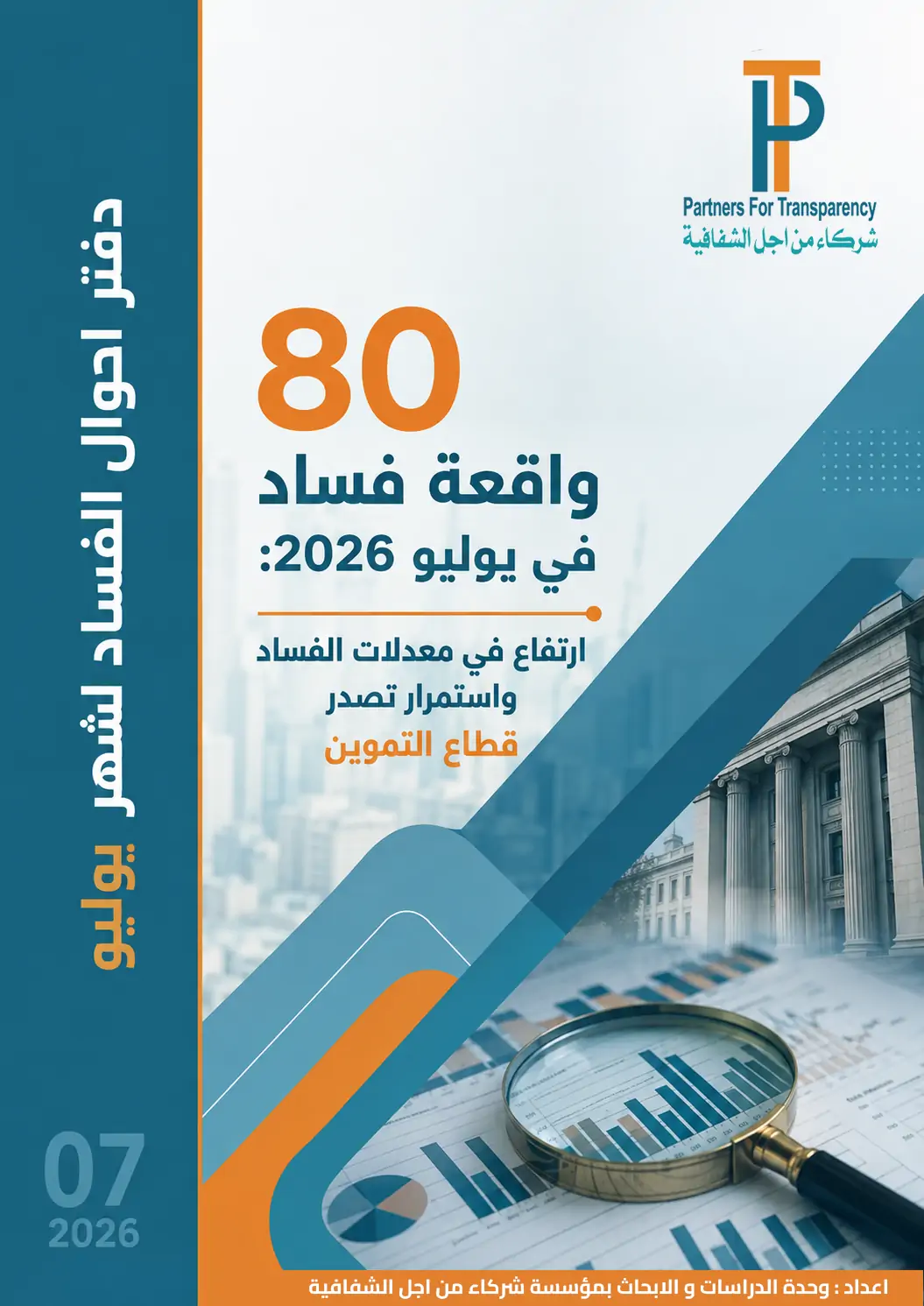
Partners call for enhanced market oversight and combating commercial fraud and fake educational entities.
The “Partners for Transparency” Foundation issued its monthly report, “Corruption Logbook for July 2026,” which monitored 80 corruption incidents in various sectors, recording an increase in the number of recorded corruption incidents.
The report showed that the supply sector continued to top the list of the most corrupt sectors for the seventh consecutive month with a rate of 35%, followed by the local government and administrative corruption sector with a rate of 21.25%, then the financial and banking sector with a rate of 17.5%, then the education sector with a rate of 15%, and finally the health sector with a rate of 11.25%.
Giza Governorate came in first place with 20% of the total observed incidents, followed by Cairo Governorate with 15%, then Minya Governorate with 7.5%. These three governorates together constituted about 42.5% of the total corruption incidents during the month.
The report indicated that oversight activity continued during July, with relevant authorities conducting more than 28 inspection campaigns in the supply sector and more than 14 cases and procedures to combat money laundering, embezzlement, and illicit enrichment. In addition, more than 10 campaigns were carried out to shut down unlicensed and bogus educational entities and academies. The month also saw the issuance of court rulings imposing life sentences and lengthy prison terms in cases of bribery, forgery of official documents, embezzlement, and money laundering. Furthermore, officials and employees were referred to criminal and disciplinary trials on charges of embezzlement, profiteering, and financial and administrative violations. Oversight campaigns were also intensified to apprehend unlicensed medical entities and individuals impersonating doctors.
The report recommended the need to intensify market oversight to reduce commercial fraud, enhance oversight of the financial sector by using modern technologies to monitor suspicious transactions, establish electronic verification rules for educational entities, expedite the issuance of the Local Government Law, tighten oversight of the health sector and medical facilities, enact legislation to protect whistleblowers, and launch community awareness campaigns to promote a culture of integrity and transparency.