EN
EN  AR
AR 
“Partners publishes the Integrity and Anti-Corruption Index report for the Arab region and the Middle East for the first half of 2026
Partners for Transparency has released its report, “The Integrity and Anti-Corruption Support Index in the Arab Region and the Middle East during the first half of 2026,” which monitors the performance of 25 countries in the areas of supporting integrity and combating corruption based on three main indicators: government effectiveness, rule of law, and transparency of administration and institutions.
The report showed a clear disparity in the performance levels of the countries covered, as only 7 countries were classified as safe countries in the field of combating corruption, with a percentage of 28% out of the total countries, namely: Jordan, Morocco, Kuwait, Egypt, Tunisia, the UAE, and Qatar, while 13 countries came in the category of stable countries with a percentage of 52%, while 5 countries fell in the category of countries under threat with a percentage of 20%, namely: Djibouti, Comoros, Somalia, Sudan, and Syria.
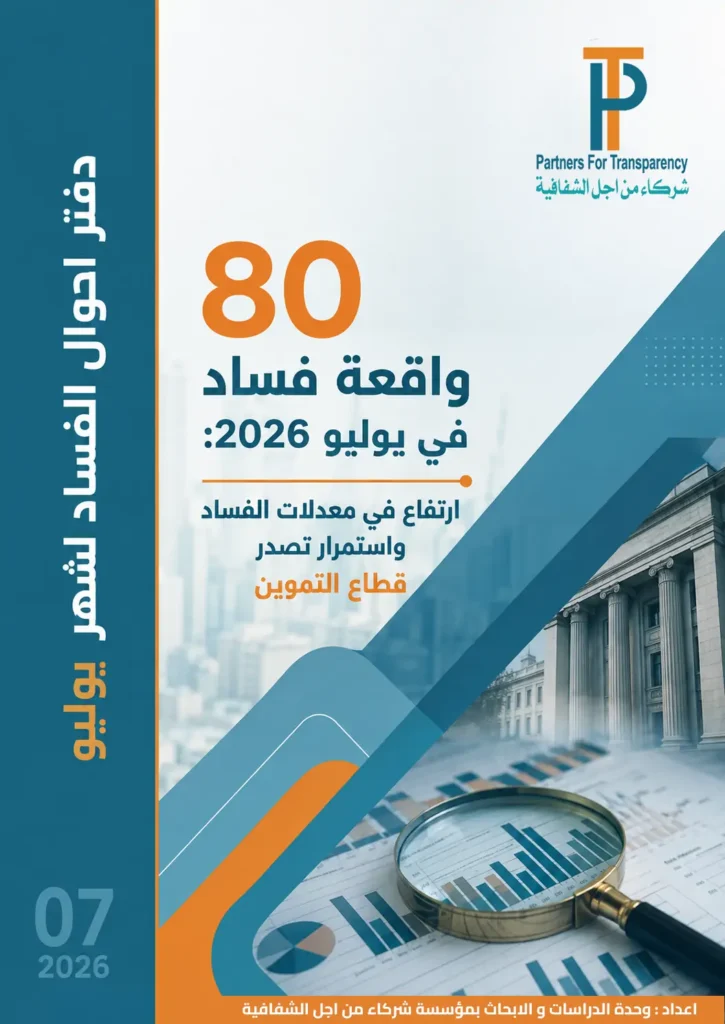
The report noted that 283 corruption incidents were monitored during the first half of 2026 in the countries under study, of which only 36,741 TP3T were referred to judicial trial, while the authorities did not take any action in 19,781 TP3T of the incidents, while the procedures in 43,461 TP3T of the incidents stopped at the stages of arrest or investigation, which reflects a disparity in the effectiveness of accountability and law enforcement systems in a large number of countries in the region.
The report indicated that the level of political and security stability is a crucial factor in the effectiveness of anti-corruption efforts, as the most stable countries have succeeded in building more efficient legislative frameworks and oversight institutions, while countries suffering from armed conflicts and political turmoil have recorded a sharp decline in the rule of law indicators.
In this context, the report recommended strengthening the independence of anti-corruption bodies in several countries, expediting the development and implementation of clear national anti-corruption strategies, enacting comprehensive legislation to protect whistleblowers and witnesses, and developing legal frameworks that regulate asset disclosure and criminalize illicit enrichment. It also stressed the importance of enhancing the independence of the judiciary, completing investigation and referral procedures in corruption cases, and activating the oversight role of parliaments, all of which contribute to consolidating the rule of law and promoting institutional integrity.
Partners for Transparency affirms that this report serves as a reference tool for decision-makers, regulatory bodies, and civil society organizations, and represents an open invitation to joint action to build governance systems based on integrity and accountability, stressing that combating corruption is no longer a reform option, but an inevitable necessity to ensure the stability of countries and the prosperity of their societies.