EN
EN  AR
AR 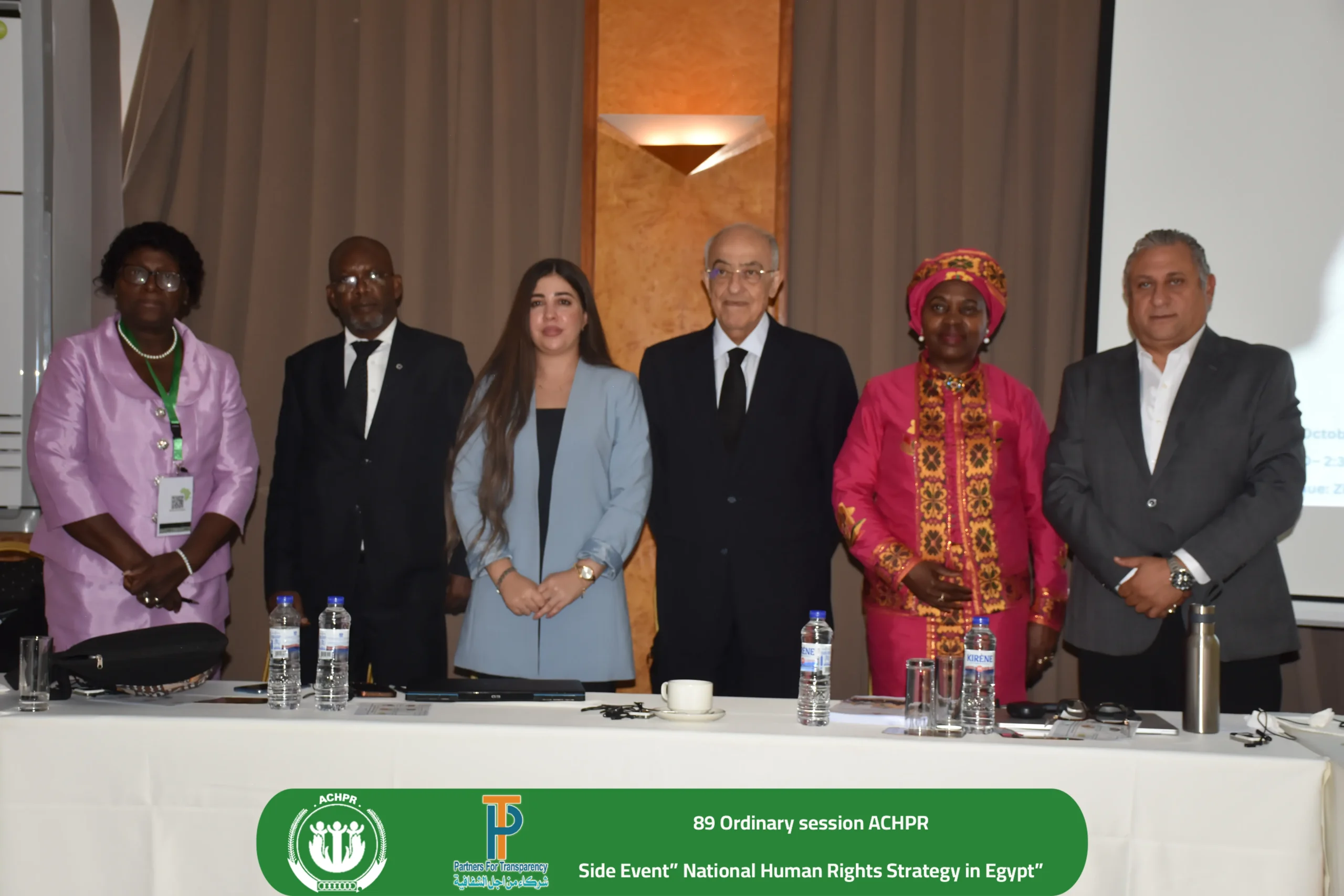
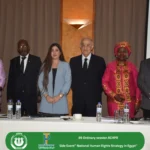
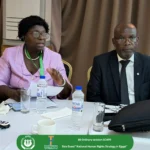
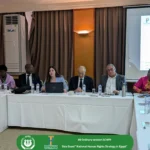
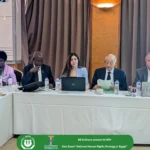
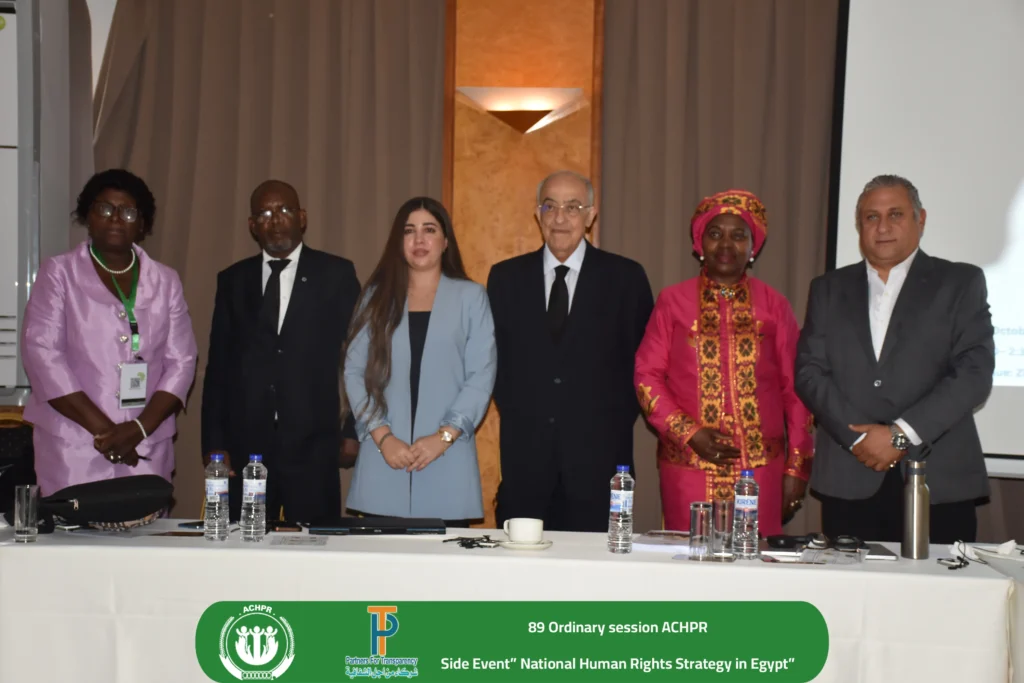
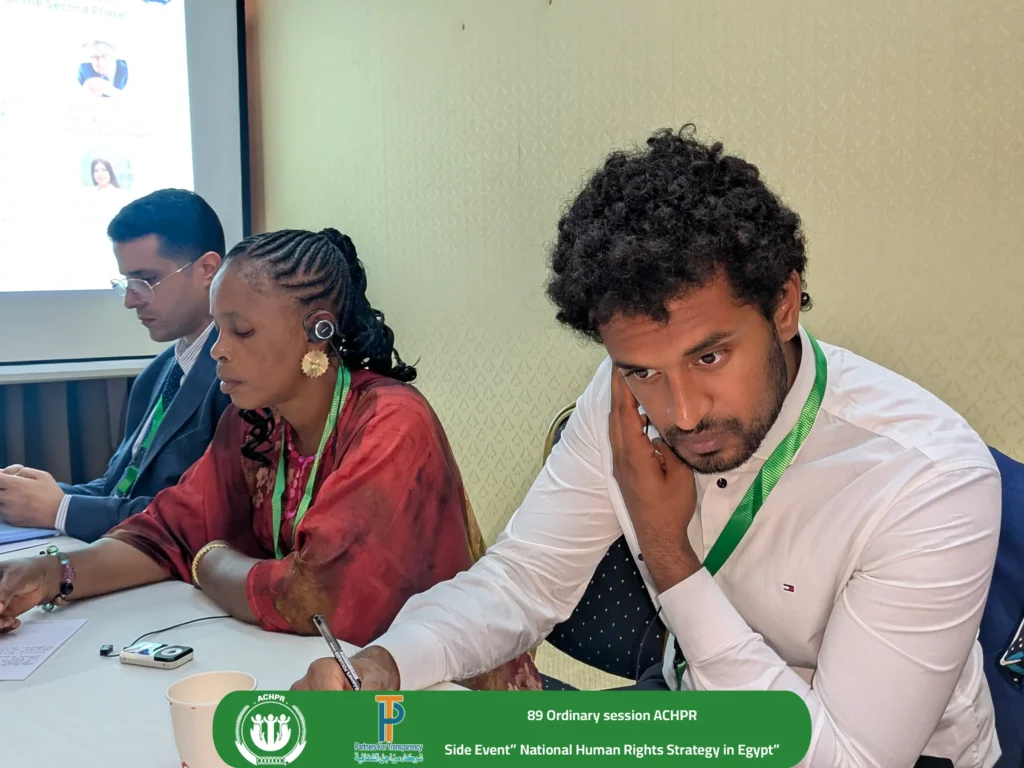
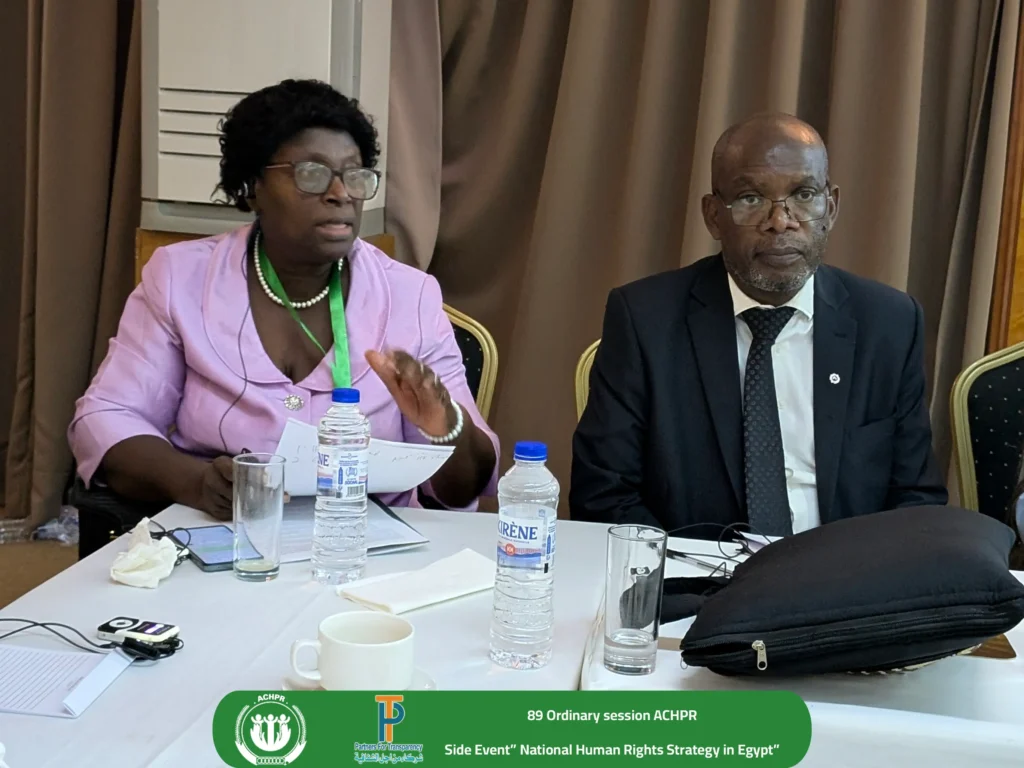
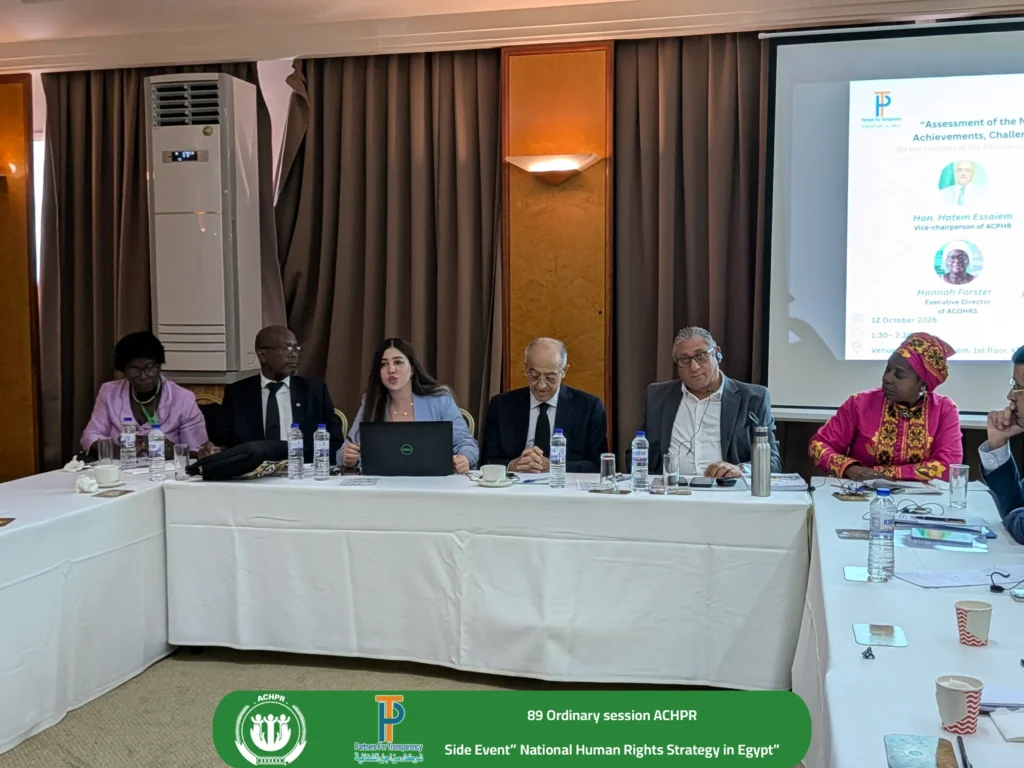
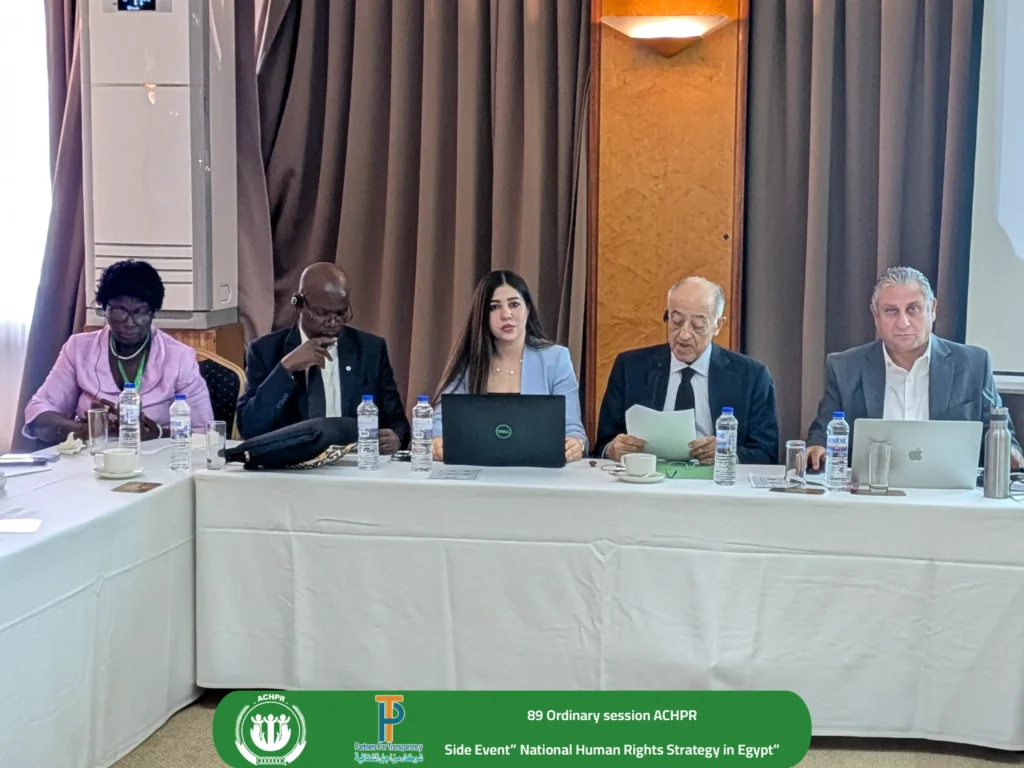
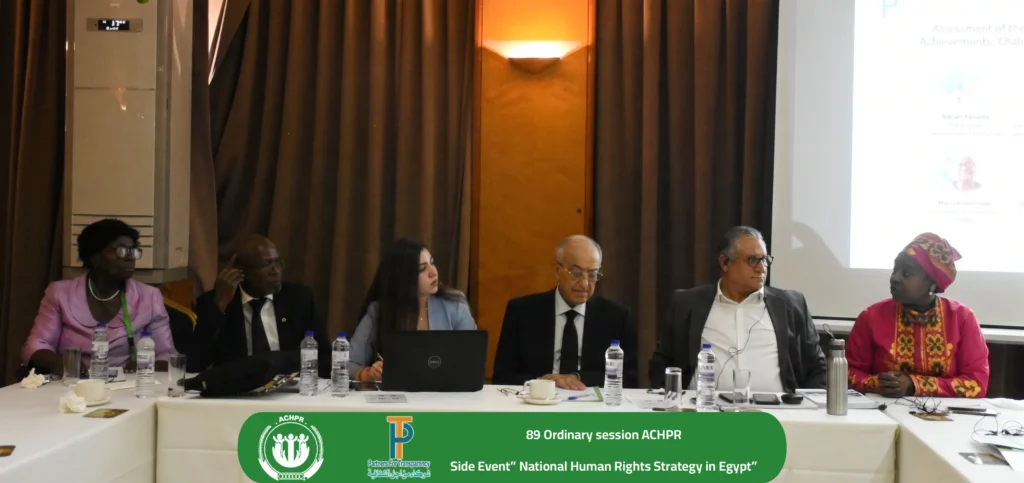
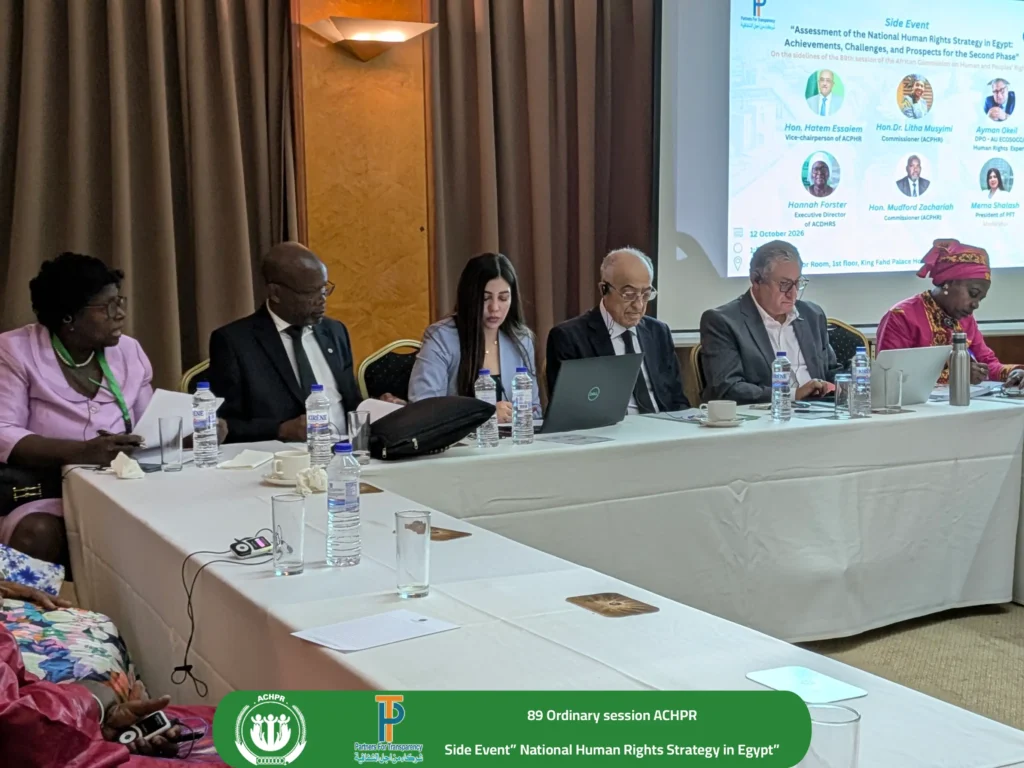
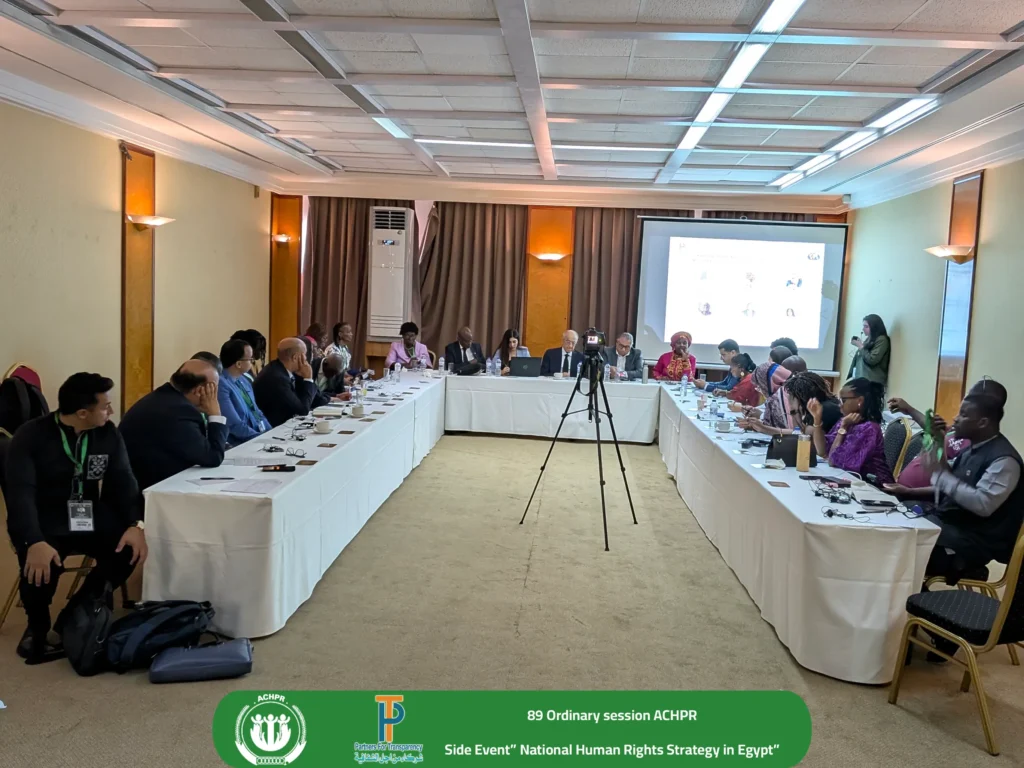
Partners for Transparency organized a side event on the margins of the 89th session of the African Commission on Human and Peoples’ Rights, held in Dakar, Senegal, titled “Assessing the Implementation of Egypt’s National Human Rights Strategy: Achievements, Challenges, and Prospects for the Second Phase.” The event brought together a number of civil society organizations, experts, and commissioners of the African Commission to present their perspectives on the current state and assessment of human rights in Egypt.
Commissioner Hatem Essaiem, Vice Chair of the African Commission on Human and Peoples’ Rights, commended the existence of a national strategy in Egypt, unlike in other African countries, and recommended that the second phase of the national strategy include a specific focus on cooperation with African human rights mechanisms and the African Commission on Human and Peoples’ Rights.
For her part, Commissioner Litha Musyimi, the Special Rapporteur on Egypt within the African Commission, reviewed the human rights situation in Egypt and noted that Egypt’s first National Human Rights Strategy (2021–2026) has established a national framework addressing civil and political rights, economic, social, and cultural rights, as well as the rights of women, children, and other groups requiring special protection, human rights education, and capacity-building. She recommended that the strategy be firmly aligned with Egypt’s obligations under the African Charter.
Meanwhile, Commissioner “Mudford Zakaria,” Chair of the African Commission’s Working Group on Social and Economic Rights, noted the improvement in the situation regarding economic, social, and cultural rights documented in Egypt and recommended continuing to strengthen social and economic rights and adopting clear, measurable indicators as part of the second phase of the strategy.
Hannah Forster ," Executive Director of the African Center for Democracy and Human Rights Studies, that the first National Human Rights Strategy represented an important step toward transitioning from addressing human rights issues through scattered policies and programs to a comprehensive five-year national framework. She reviewed the lessons learned and the general outlines of the strategy’s second phase, 2026–2031.
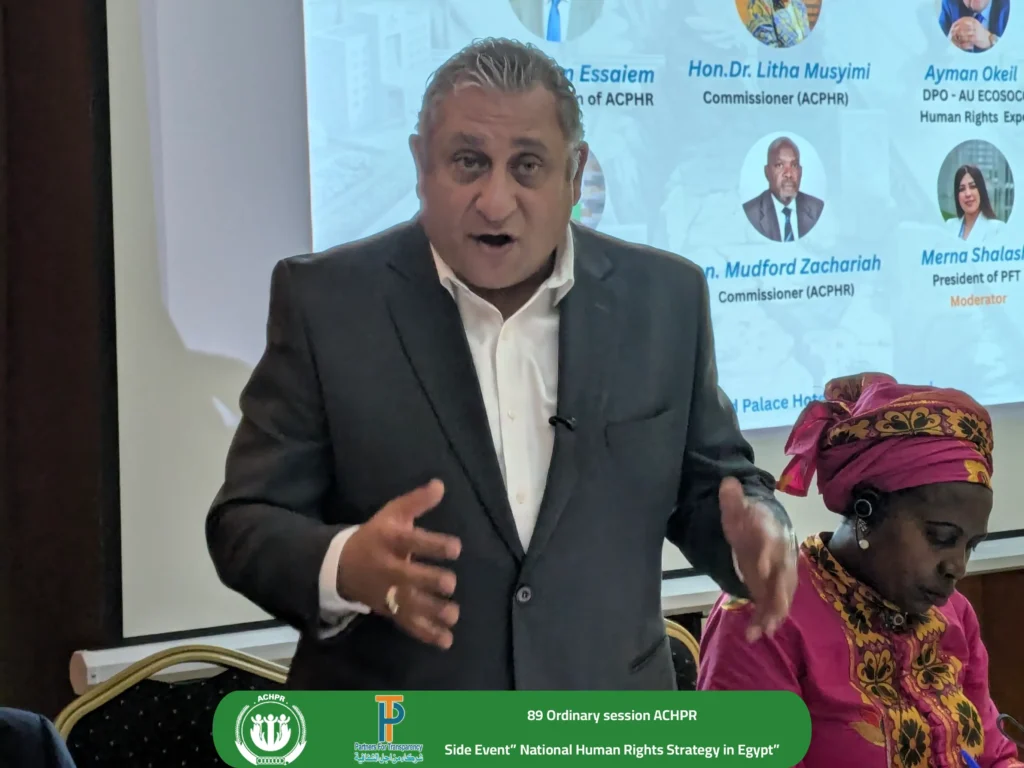
For his part, Ayman Okeil, a human rights expert and Vice President of the African ECOSOC, emphasized that Egyptian civil society was involved in all stages of the strategy during its first phase. He recommended the importance of including an implementation timeline in the second
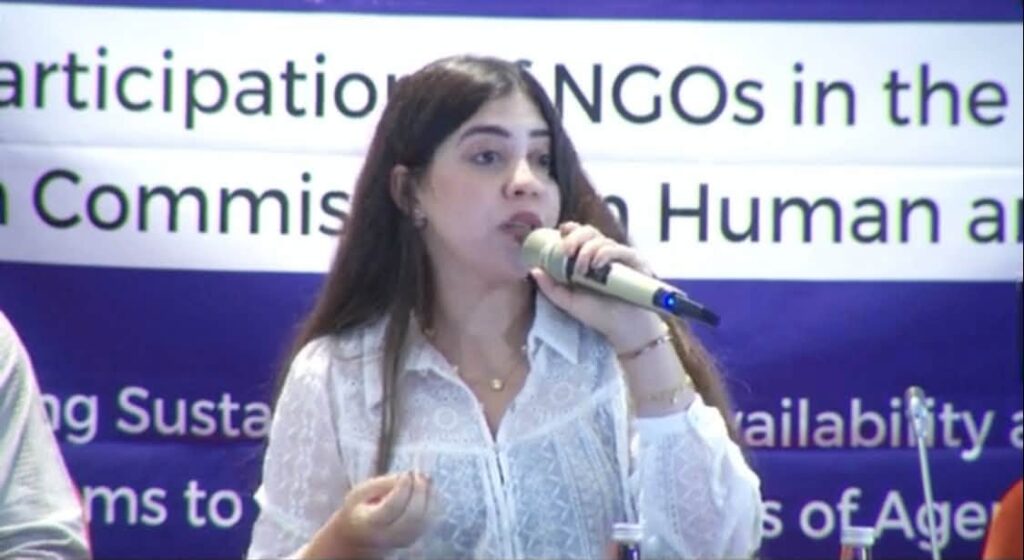
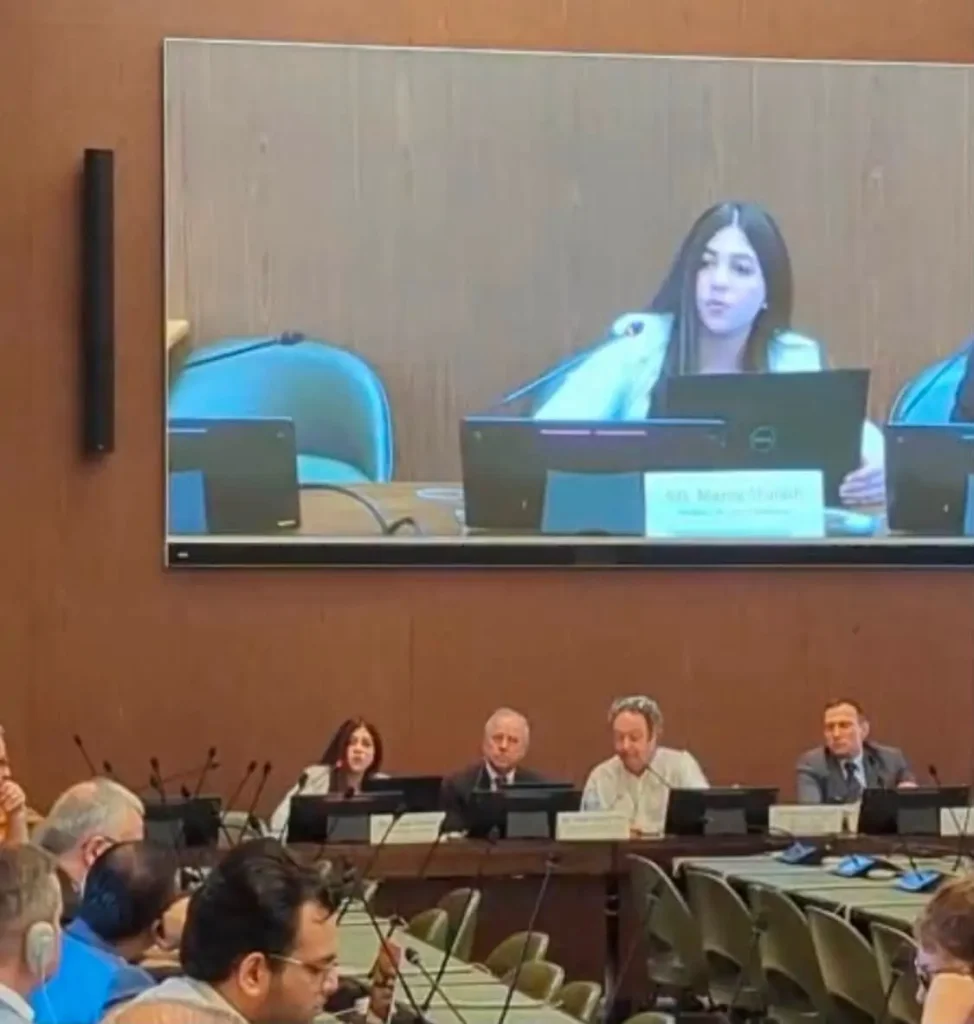
The event was moderated by Ms. Merna Shalash, President of the Partners for Transparency Foundation, who emphasized that national human rights strategies are one of the key tools that states rely on to translate their international and regional human rights commitments into national policies, legislation, procedures, and practices, thereby contributing to the strengthening of the protection of fundamental rights and freedoms.